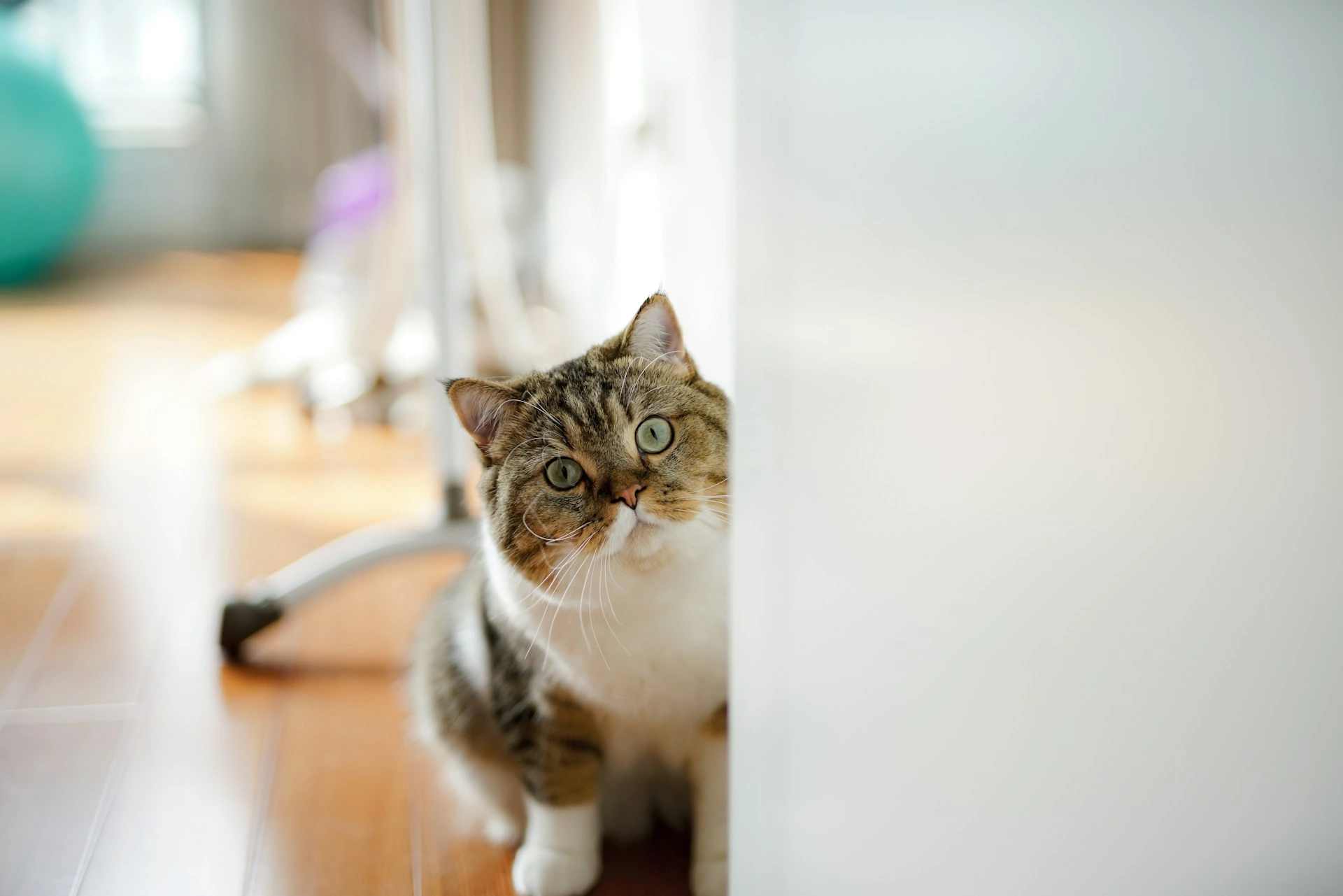
Have you ever noticed Fluffy disappearing to quiet corners, under the bed, or behind the couch for long periods? At Fort Payne Animal Hospital, we have helped many cat owners concerned about their cat’s hiding behavior. While hiding is often a normal feline instinct, it can also indicate stress, illness, or discomfort. Understanding feline stress signs, sick cat behavior, and common causes of cat hiding can help you provide the best care for your feline friend and ensure their home is a safe and comforting environment.
Kitties are naturally a bit mysterious. Hiding helps them feel safe and secure, especially if something seems a little off in their world. By keeping an eye on Fluffy’s usual routines and any little changes in her behavior, you’ll be able to spot when she’s just being a cat—or when it might be time to call your vet.
Why Cats Hide
There are actually quite a few reasons why Fluffy might decide to hide. Sometimes it’s just instinct, and sometimes it’s her way of coping with what’s going on around her. Figuring out what’s behind your kitty’s disappearing act can help you keep her happy and healthy.
Stress and Anxiety
Kitties are pretty sensitive to changes in their environment. Things like moving, bringing home a new pet, loud noises, or even having visitors can make Fluffy feel uneasy. When that happens, she may retreat to her favorite hiding spot to feel safe. Watch for other feline stress, like pacing, eating less, over-grooming, or hissing. Keeping things calm and predictable, and giving your cat quiet places to relax, can go a long way toward helping her feel secure.
Illness or Pain
If Fluffy isn’t feeling well, she may go into hiding. This is a classic sign that something’s up. Other things to watch for include not eating, acting tired, vomiting, diarrhea, or changes in her litter box habits. Since cats are pretty good at hiding pain, it’s important to take any long-lasting signs of pain seriously and check in with your vet.
Overstimulation or Sensory Overload
Even things your cat usually enjoys, like petting or playtime, can sometimes be a bit much for her. If Fluffy gets overstimulated, she might dash off to hide for a while. Pay attention to how much attention your kitty likes, and make sure she has quiet spots to retreat to when she needs a break.
Territorial and Instinctive Hiding
Most cats love cozy, enclosed spaces. Whether it’s a cardboard box, a cat tree with a high perch, or a quiet corner behind the couch, these spots let Fluffy watch what’s going on while feeling safe and in control. Having plenty of hiding places is especially helpful if you have more than one pet at home.
Environmental Factors in Alabama
Alabama’s hot, sticky weather can also make Fluffy seek out cool, shady spots to hide. Some cats, especially those with flat faces, may have a harder time with the heat and humidity. Keeping your home cool with fans, air conditioning, and plenty of shaded areas can help your kitty stay comfortable and out in the open.
Signs That Hiding May Indicate a Problem
While occasional hiding is normal, certain patterns or accompanying symptoms suggest your cat may need veterinary attention:
- Persistent refusal to eat or drink
- Vomiting, diarrhea, or litter box issues
- Sudden aggression, hissing, or vocalization changes
- Unexplained weight loss or lethargy
- Poor grooming or over-grooming certain areas
- Hiding that lasts longer than a day or two without resuming normal activity
If you notice any of these signs along with hiding, don’t wait—reach out to your vet right away. Catching problems early can make a big difference for your furry friend.
How to Support a Hiding Cat
Create Multiple Safe Spaces
Set up a few quiet, comfy spots around your home just for Fluffy. Covered beds, cat trees, or even a simple cardboard box with a soft blanket can make your kitty feel safe and cozy. If you have more than one cat, having several hiding places helps everyone get along.
Minimize Stressors
Try to keep things calm and predictable for your cat. Loud noises, sudden changes, or too many new faces can make Fluffy nervous. Switch out toys and enrichment items slowly so your kitty doesn’t get overwhelmed.
Encourage Gentle Interaction
Never force Fluffy out of her hiding spot. Instead, try coaxing her with a favorite toy, a treat, or a gentle voice. Let her come to you when she’s ready. Respecting her space will help build trust and strengthen your bond.
Monitor Daily Health and Behavior
It’s a good idea to keep track of Fluffy’s eating, drinking, grooming, litter box habits, and how often she hides. Sometimes, changes in these routines are the first clue that something’s wrong. Sharing this info with your vet can help them catch problems early.
Use Enrichment to Reduce Stress
Engaging cats mentally and physically can prevent stress-related hiding. Consider:
- Puzzle feeders or treat-dispensing toys
- Scratching posts to satisfy instincts
- Vertical spaces like shelves or cat trees for safe observation
- Interactive toys to encourage play in safe areas
- Rotating toys to maintain novelty and interest
Giving your cat plenty of things to do and explore helps her feel safe and confident in her home.
Common Hiding Spots
Knowing where cats typically hide can help you check on their well-being:
- Under beds, couches, or dressers
- Inside closets or cabinets
- Behind curtains or furniture
- In cardboard boxes or enclosed pet beds
- On high shelves or window perches
Be sure to check these favorite hiding spots now and then for any signs that Fluffy might not be feeling her best.
When to Seek Veterinary Care
Hiding combined with other symptoms may indicate a medical problem. Contact your Rainsville, AL veterinarians immediately if your cat:
- Refuses food or water for more than 24 hours
- Has vomiting, diarrhea, or urinary issues
- Shows unusual aggression or excessive vocalization
- Appears weak, disoriented, or uncoordinated
Getting your kitty checked out quickly helps make sure she gets the care she needs.
Read about why your cat may be hiding in an article by PetMD, which you can read here. Want to read more about cat behavior? Click here to read an article from Britannica on it.
FAQs About Cat Hiding Behavior
Is hiding always a sign of illness?
No. Many cats hide simply for comfort or observation. Occasional hiding is normal.
How do I know if hiding is stress-related?
Look for other feline stress signs, such as decreased appetite, pacing, excessive grooming, or sudden aggression.
Can I prevent hiding behavior?
Providing safe spaces, predictable routines, and environmental enrichment can reduce unnecessary hiding.
Are some cats naturally shy?
Yes. Personality plays a major role. Respecting your cat’s temperament and preferences promotes a safe and happy environment.
What should I do if my cat hides after a vet visit?
Post-visit hiding is common due to stress. Provide quiet spaces, reassurance, and allow time to adjust.
Can environmental modifications help?
Absolutely. Cooler indoor temperatures, shaded areas, vertical spaces, and quiet zones reduce stress-induced hiding, especially in hot Alabama summers.
How can I tell if hiding is becoming dangerous?
Prolonged hiding combined with changes in appetite, bathroom habits, or activity level should be addressed immediately by your veterinarian.
Visit Our Rainsville, AL Vet Clinic
Hiding can be normal for cats, but it can also indicate stress or health problems. At Fort Payne Animal Hospital, your Rainsville, AL pet clinic, we help identify cat hiding behavior, recognize feline stress signs, and evaluate sick cat behavior.
Looking for a great vet near me? You found us! Visit our Rainsville, AL vet clinic to schedule an appointment!
This blog is for informational purposes only. Always consult your veterinarian for accurate medical advice, diagnosis, or treatment plan for your cat, and follow their guidance.
Do you want to learn more about our Fort Payne vet clinic? Go to our main Services page here for an overview of the services we offer. You can also learn more about our Wellness and Vaccinations options here.